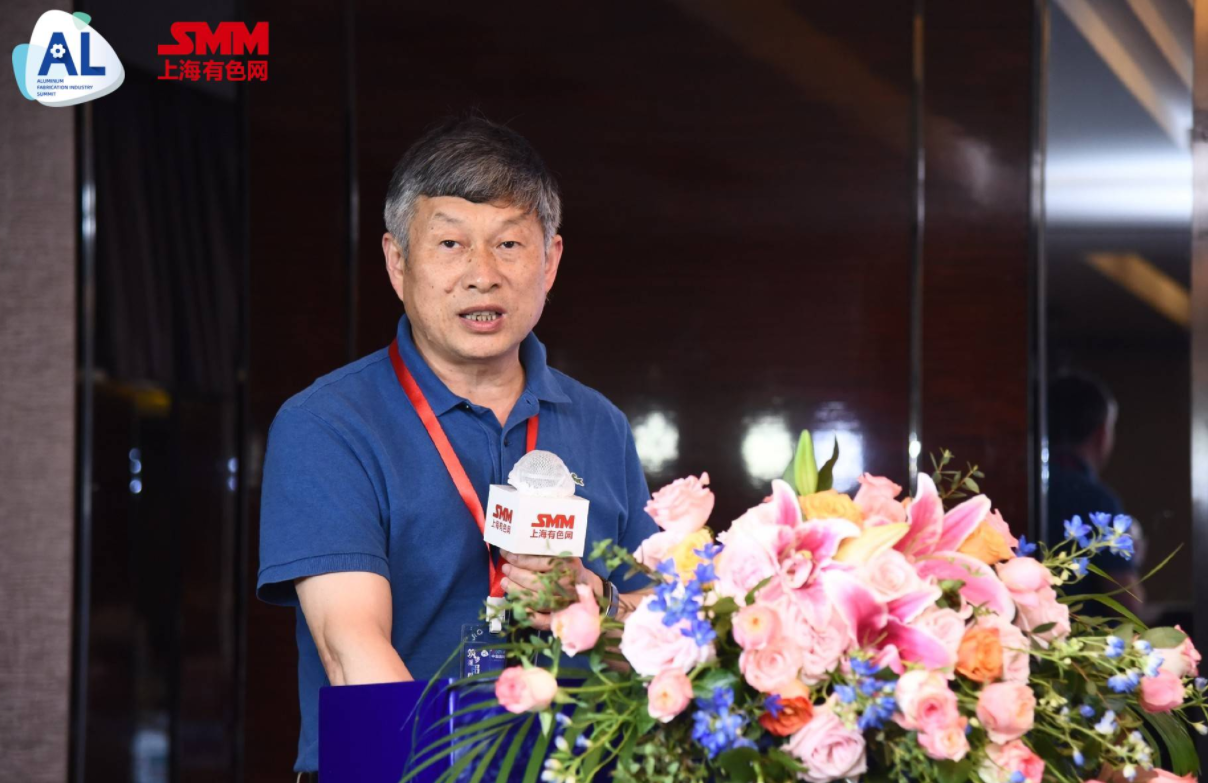
SMM5: at the 2021 (16th) China International Aluminum processing Summit jointly held by Shanghai Futures Exchange and SMM, Lin Lin, chief engineer of Chinalco Group, shared his practice and thinking on clean aluminum, analyzed the practice and difficulties of clean aluminum and the progress of clean aluminum technology, and explained the opportunities and prospects of aluminum processing.
I. defects related to metallurgical quality
The metallurgical quality of aluminum alloy ingots usually refers to the inherent quality of aluminum alloy ingots, which mainly includes three parts:
The uniformity of chemical composition in aluminum alloy ingot and the control level of standard composition, that is, alloying;
The rationality and uniformity of grain structure in aluminum alloy ingot, that is, grain refinement;
The control level of impurities in aluminum alloy ingots, including gases and inclusions, that is, melt purification.
In aluminum and aluminum alloy products, melt purification is the key technology to ensure the metallurgical quality of aluminum and aluminum alloy materials. The purpose of purification of aluminum alloy melt is to reduce the content of hydrogen and oxidized inclusions in the melt. At present, the hydrogen content of aluminum alloy ingots is generally in the range of 0.10mL/ (100gAl) ~ 0.20 mL/ (100gAl). For inclusion content, it is generally not possible to completely remove non-metallic inclusions with a size of less than 10 μ m, and the content of non-metallic inclusions below 10 μ m is generally less than 0.02%. Stomata and inclusions influence each other and are associated with each other.
In the melting process of aluminum and its alloys, there are inclusions and gases in the aluminum melt, which affect the purity of the melt, resulting in defects such as bubbles, pores, inclusions, porosity, cracks, white spots and so on. It has a significant impact on the appearance quality and properties of the subsequent processing products, such as strength, plasticity, corrosion resistance and so on.
Improving the purity of aluminum alloy melt and improving the metallurgical quality of aluminum alloy ingots has always been the goal of producing high-performance aluminum alloy processing products.
II. Brief Analysis of the Progress of Clean Steel Technology
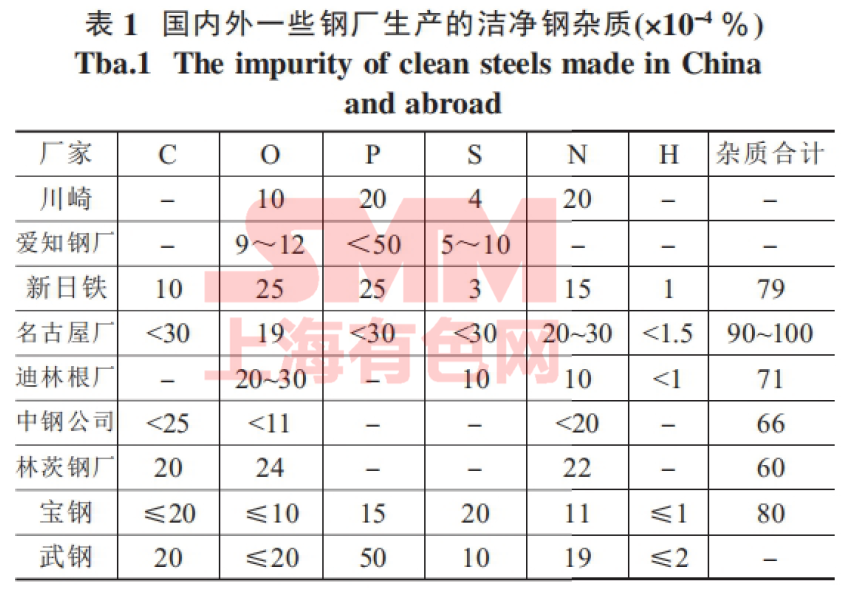
In 1962, Kiessling first put forward the term (clean steel) of clean steel, which generally refers to the steel with low content of impurity elements, such as O, S, P, H, N, Pb, As, C, Zn and so on. Cleanliness is relative.
Canadian Mitchell and Nippon Steel Fkmoto put forward the concept of "zero inclusion" steel. The so-called "zero inclusion" steel does not mean that there are no inclusions in the steel, but refers to the steel in which the liquid steel does not precipitate any non-metallic inclusions before solidification.
At the end of 1990s, with the development of China's heavy industry, the industrial requirements for steel quality are getting higher and higher, domestic enterprises began to study clean steel.
When the purity of the material reaches a certain degree, some abrupt changes will occur in its properties, such as the acid corrosion resistance of ultra-pure iron (wFe > 99.995%) is equal to that of gold or platinum; when w (P) in 18Cr2NiMo stainless steel is reduced from 0.026% to 0.002%, its corrosion resistance to nitric acid is increased by more than 100 times.
Third, the practice and difficulties of clean aluminum.
Areas of demand for "clean aluminum":
Automobile lightweight-formability
For metal packaging-deep drawing properties, aluminum foil
3C product use-homogeneity and beauty
Aerospace applications-high strength and long life
For printing products-flawless
Rail transit-- low cost and long life
For special devices-- low defect
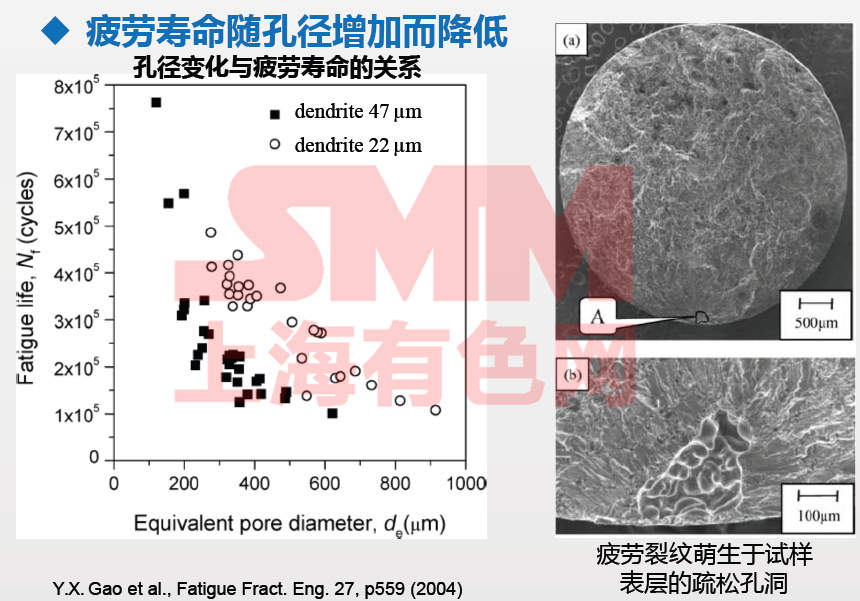
The difficulty of clean aluminum: microporosity
Generally speaking, porosity is divided into shrinkage porosity and gas porosity. Shrinkage porosity is a small hole formed between dendrite boundaries during melt solidification due to insufficient shrinkage, and gas porosity is caused by high hydrogen content in the melt.
The difficulty of cleaning aluminum: coarse compounds
Melting of coarse dendritic network compounds during induction heating. The crystallographic characteristics of free growth of cavities without crystals-- not casting "looseness"! After the dendritic boundary compound melts and exudates, it leaves a similar loose hole! Through the dendritic boundary compound melting out of the grain boundary pipe, the gas is backfilled into the hole, the subsequent extrusion can not be welded, and the "stomatal" defect is formed in the corresponding area of the product!
The difficulty of clean aluminum: the pit defects on the anodized surface caused by the aggregation of banded compounds, as well as the technical difficulties such as inclusions and compound segregation.
IV. Brief Analysis of the Progress of Clean Aluminum Technology
Porosity may account for 0.5% of the ingot volume, and this porosity is thought to reduce fatigue life, especially in the long and short transverse directions of plates about 3 to 10 inches thick. In theory, these pores are the places where fatigue cracks initiate. Therefore, the invention wishes to reduce the porosity of the plate to the lowest possible level, such as the porosity of the 3 to 6 inch plate does not exceed 0.05% and the porosity of the 6 to 10 inch plate does not exceed 0.1%.
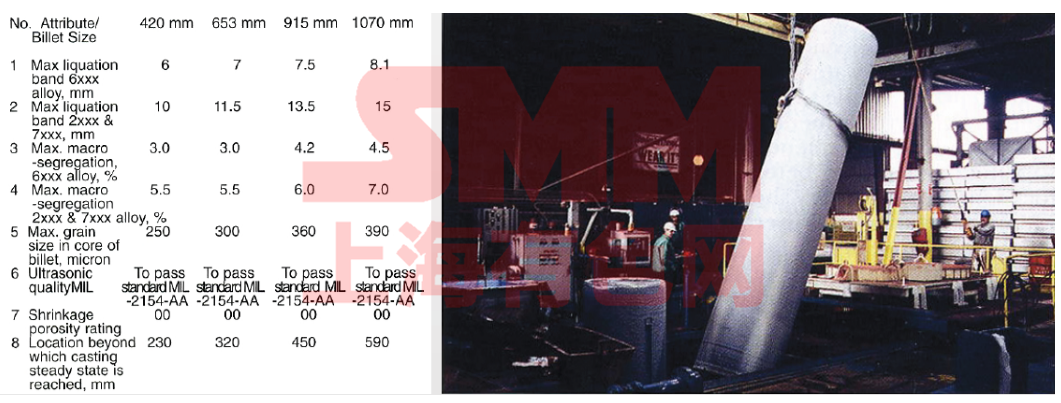
The finished products of flat ingots will not have shrinkage and pores, and the cast products have fine grains and ultra-fine lattice sizes. The main indicators such as hydrogen content per 100g aluminum is lower than 0.12cc. The contents of sodium, calcium, and lithium are strictly controlled and the alkali metal salt content is so low that the flat ingot can pass the US military standard (Milstd) 2154 ultrasonic testing AA test requirements.
Among the low purity materials, the recrystallized microstructure shows the lowest fracture toughness and intergranular fracture mode. In high purity materials, there are no intergranular micropores or intergranular coarse two-phase particles, and the recrystallized structure has better tolerance to fatigue crack initiation.
V. opportunities and prospects of aluminum processing
High-performance, high-strength and high-toughness aluminum alloy materials are mainly used in the manufacture of lightweight structures in all kinds of aircraft, aerospace vehicles, missiles, weapons, transportation and mechanical equipment, as well as the manufacture of injection molding moulds for plastic products, and so on. The development of high-strength and high-toughness aluminum alloy can not only play a strong supporting role in the aerospace field of a country, but also can promote the overall technological progress and equipment level progress of the aluminum processing industry because of its high processing requirements.
The world produces nearly 800000 tons of high-strength and high-toughness aluminum alloys of various grades every year, with a total output value of more than US $6 billion, of which China's annual production is close to 20, 000 tons.
Development direction
Independent innovation: develop efficient aluminum alloy melt purification technology with independent intellectual property rights.
Narrow the gap: in the aspect of aluminum alloy metallurgical quality control, strengthen the basic research and investment of high-performance aluminum alloy materials to form a complete set of advanced preparation technology.
High-quality development: to meet and support the needs of the domestic aviation market and civil market, improve product quality, and achieve high-quality and rapid development of high-performance aluminum products.
Surpass the leader: provide technical reserve for the development of high-performance aluminum, realize the material first, and finally realize the material and technological innovation to lead the market.